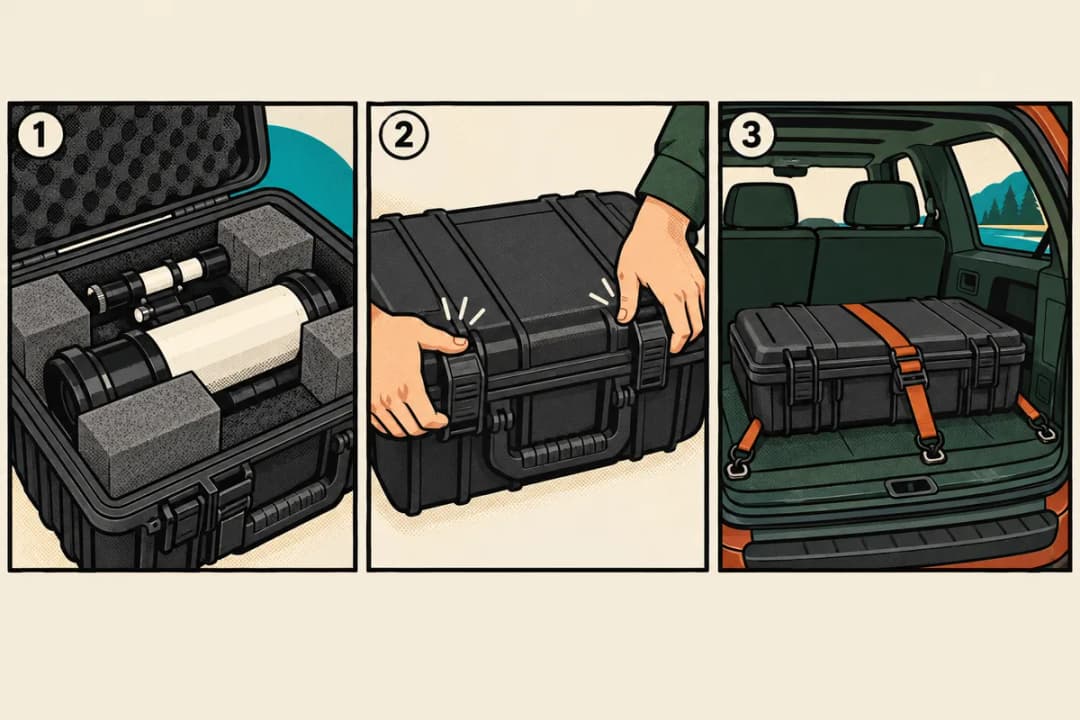


- Check your state's transport law first: Michigan and Wisconsin, for example, require a crossbow to be uncocked or unloaded in a vehicle.
- Never travel with a cocked crossbow; a bump can fire it.
- Carry it in a padded soft case or a hard case, with broadheads off and boxed.
- Strap it down in the truck or on the ATV so it can't slide or bounce.
- For flights, crossbows go in checked baggage only, in a lockable hard case.
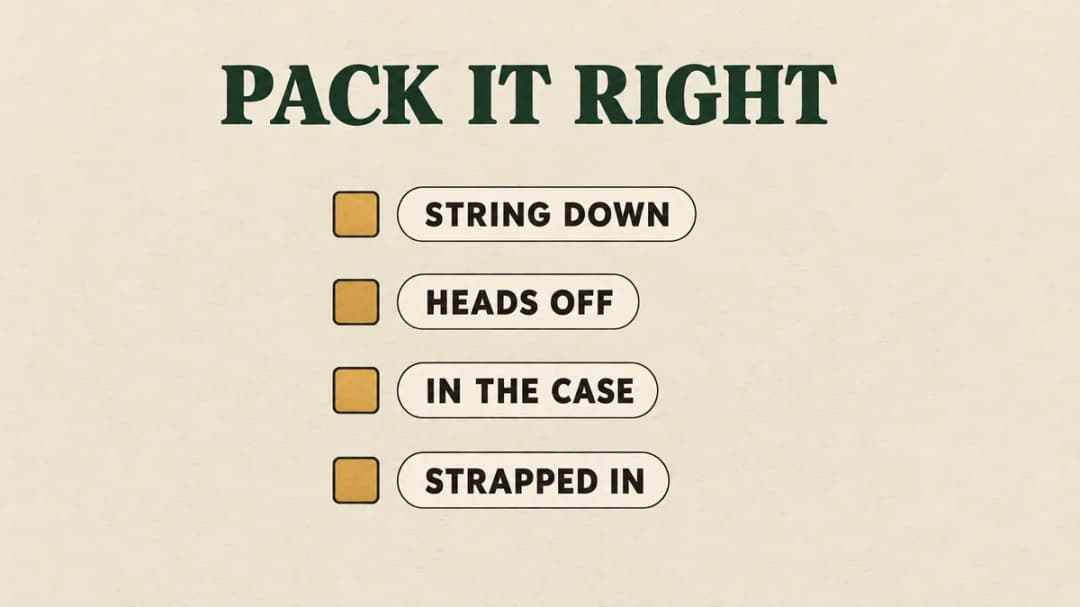
Four steps, every trip: uncock it, take off the broadheads, case it and strap it down. 🙌
The drive is where limbs crack, scopes lose zero and a cocked crossbow can fire or break a law, so check your state’s rules too. A padded crossbow case means your bow arrives as on target as when you left home.
Crossbow transport laws: check your state first
Crossbow transport rules are set state by state, and they differ. Several states ban a cocked or loaded crossbow in a vehicle, and some accept a case or the trunk instead.
1. Know your state's crossbow transport law
| State | Crossbows in a vehicle |
|---|---|
| Michigan | On public land or roads: unloaded and uncocked, or in a case, or in the trunk |
| Wisconsin | Must be uncocked or unloaded |
| Ohio | No loaded hunting implement while going to or from a deer hunt |

// Free printable
Get the range log I actually use.
Seventeen printable pages: session log, score tracker, a 30-day drill challenge, a bow maintenance card, a first-season checklist and more. Join the monthly email and it lands right away.
Choose the right crossbow case and padding
A good case does most of the work on the road, it keeps your limbs, cams and scope from taking the knocks.
2. Pick the right case
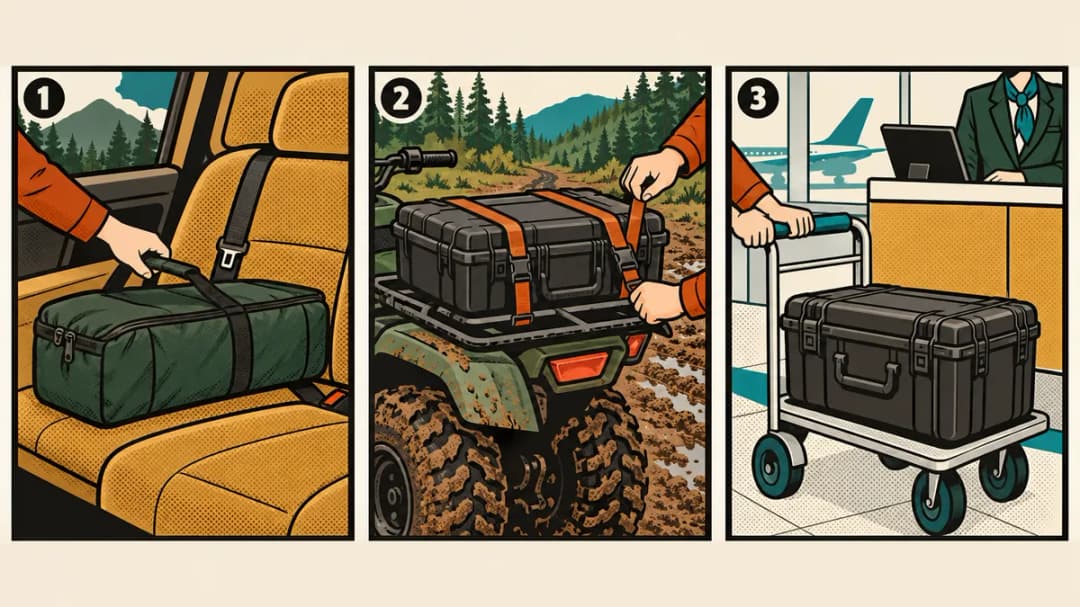
A padded soft case is light and fine for the drive to your spot. A hard case protects best on rough roads, ATVs and flights. Compare options in the best crossbow cases.
3. Add padding around the scope
In a soft case add foam or a towel around the crossbow, especially the scope. If it takes a knock anyway, check your zero before you hunt; a scope that won’t hold zero needs replacing (see the best crossbow scopes).
Uncock your crossbow before every trip
This is the one step you never skip, whatever you drive and however short the trip.
4. Uncock and unload
Uncock by shooting a field-point or discharge bolt into a target or clear ground, never by dry-firing. Read more in how long you can leave a crossbow cocked.
Remove broadheads and carry them boxed
Loose broadheads are the sharpest thing in your vehicle, so give them their own box.
5. Take broadheads off
Swap to field points or empty shafts in the quiver for the ride. Need new heads? See the best broadheads.
Secure your crossbow in cars, trucks, ATVs and planes
How you secure it depends on what you’re riding in. Here’s each one, from the cab to the plane.
6. Secure it inside your vehicle
A loose crossbow can become a projectile in a crash or get damaged on a hard stop. Use your hard case's straps, or wedge the soft case betwen other gear so it can't slide, and keep your bolts in the quiver.
7. Strap it down on an ATV or UTV
Off-road, use tie-downs or a rack made for your machine so the crossbow can't rattle or slip. Check the straps after the first rough stretch.
8. Use a gun rack only on private trails
On private trails, an ATV gun rack can carry an uncased crossbow. Lock it down, uncocked, broadheads off, and check that your state allows uncased transport.
9. Fly with it in checked baggage
TSA allows bows in checked bags only, never carry-on, and sharp items must be sheathed or wrapped. Use a lockable hard case and check your airline's rules before you book.
10. Inspect your transport gear
Check zippers, straps, latches and padding before each season. A torn strap or broken latch is cheaper to replace than a cracked limb.
Additional crossbow transport tips
- Double-check case closures before you drive.
- Use a bright tag so you can find your case fast.
- Pick a waterproof case for rainy seasons.
- Take batteries out of lighted scopes for long trips to prevent corrosion.
| Do | Don't |
|---|---|
| Use a case whenever you can, even where it isn't required. | Assume every case fits every crossbow. |
| Keep gear clean and dry on the road. | Leave your crossbow exposed to rain or sun. |
| Inspect your crossbow after the trip. | Rush the packing. |
| Check straps and locks before you drive. | Over-tighten straps across the limbs or scope. |
Crossbow transport pros and cons: is the extra effort worth it?
Proper transport takes a few extra minutes. It saves your scope zero, your limbs and your hunt.
Pros
- Protects against dings and scratches
- Keeps your scope zeroed
- Keeps you and your passengers safe
- Prevents an accidental discharge
- Keeps you legal
Cons
- Takes time to pack properly
- Good cases cost extra
- Hard cases are bulky
- Airlines add their own rules
Before your trip, practice on a crossbow target and check your scope. Then shoot one group after you arrive to confirm nothing moved.
Prefer to watch? This video shows a fitted crossbow case in use.
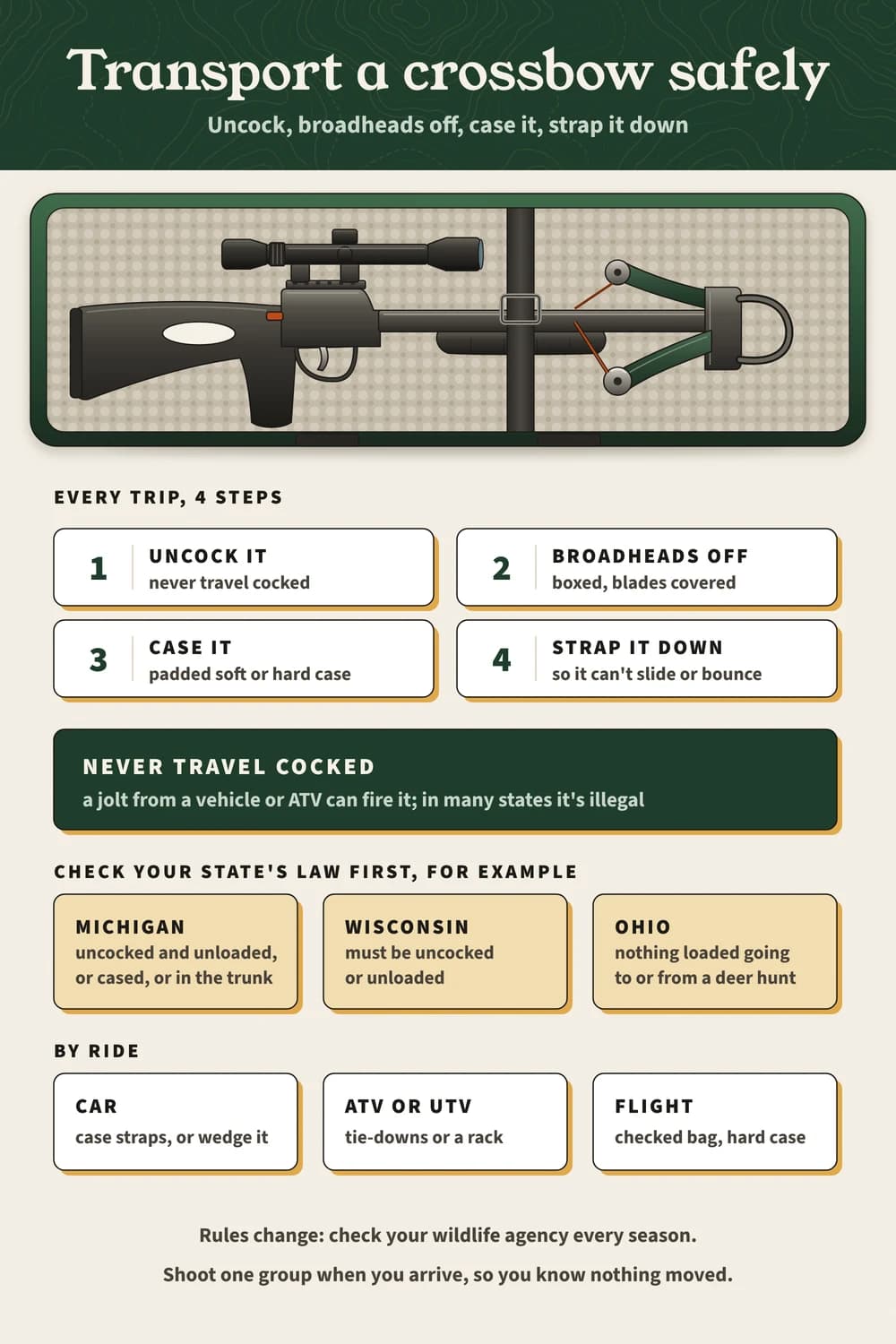
Before you load the truck, here's the full transport checklist in one picture.
// FAQ
Frequently asked questions
Quick answers to the questions readers ask most.
Is it legal to transport a cocked crossbow?
In many states, no. Michigan and Wisconsin, for example, require a crossbow in a vehicle to be uncocked or unloaded (Michigan also accepts a case or the trunk), so check your state's rules.
Do I need a crossbow case for short trips?
Yes. A case protects the scope and limbs on any drive, and in some states it's how you stay legal.
Can you fly with a crossbow?
TSA allows bows in checked baggage only, not in carry-on bags. Use a lockable hard case, sheathe anything sharp and check your airline's sporting equipment rules.
Should I remove my crossbow's scope for transport?
No, not if it's padded in a good case. Check your zero after any rough trip.
Can I use the same case for different crossbows?
Only if both fit snugly. A crossbow that slides around inside a case can still get damaged.

Final thoughts
To transport a crossbow safely, uncock it, take off the broadheads, case it and strap it down, and check your state's law first.
Shoot one group when you arrive and you'll know your setup survived the trip. Track those groups in the free range log.
