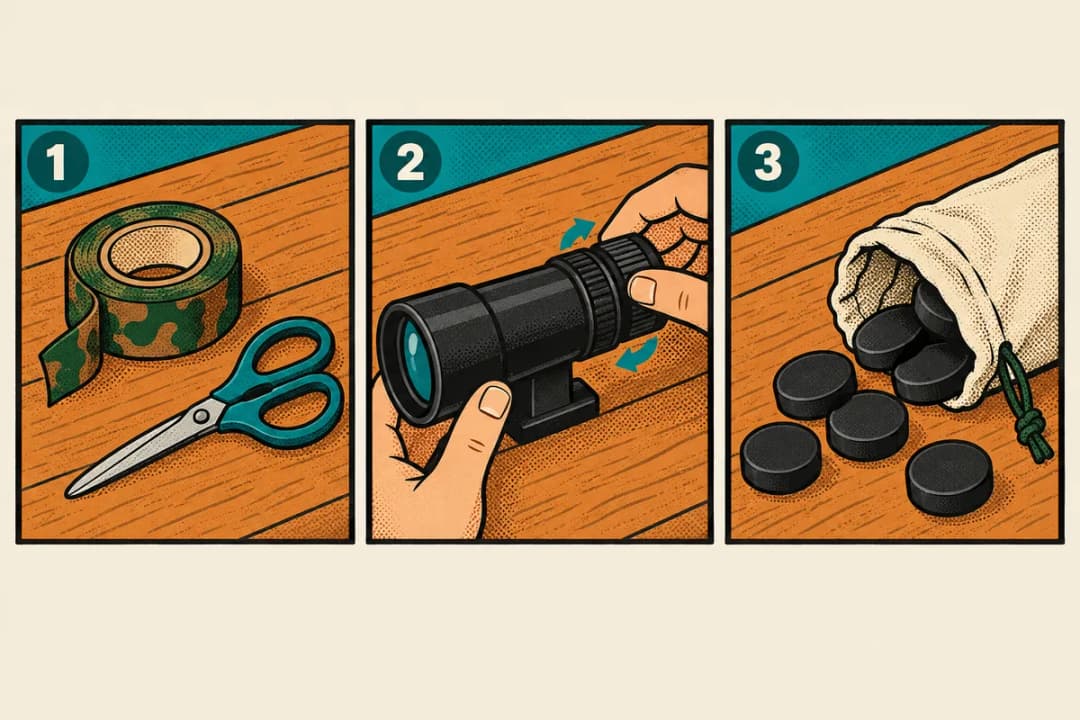


- Spend first on upgrades that change results: a better scope, matched bolts and broadheads, and a comfortable stock.
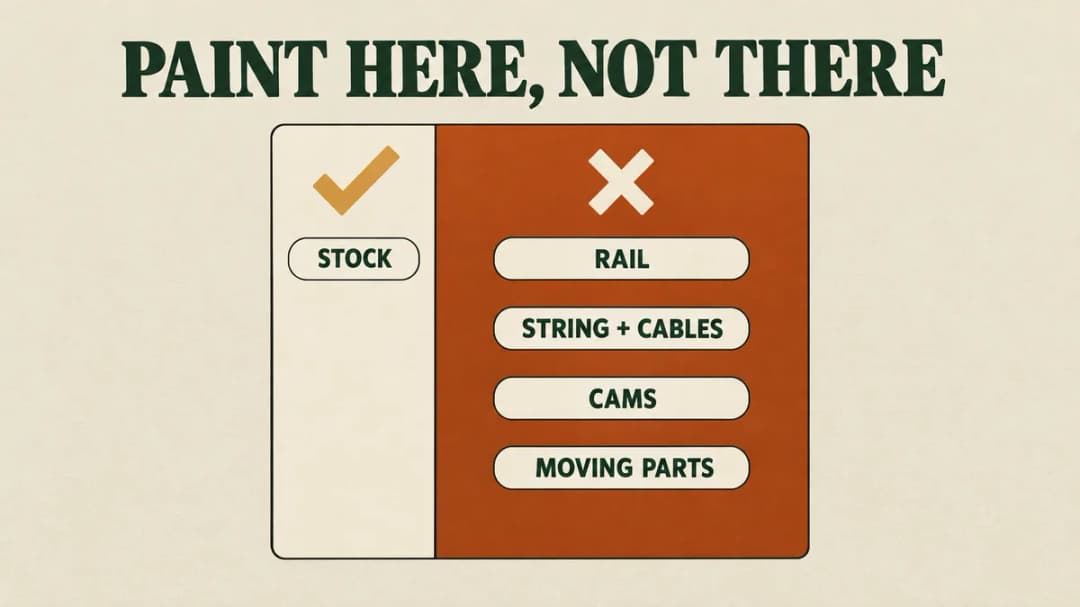
- A matte paint job or camo wrap adds style and cuts glare, as long as it doesn't touch the rail, string or trigger.
- String suppressors and limb dampeners make a crossbow quieter and calmer to shoot.
- Check your owner's manual and warranty first: underweight bolts and altered parts can void coverage.
- Practice with every change before you hunt with it.
The mistake to avoid: swapping parts at random a week before season, shifting your point of impact or voiding the warranty. 🙈
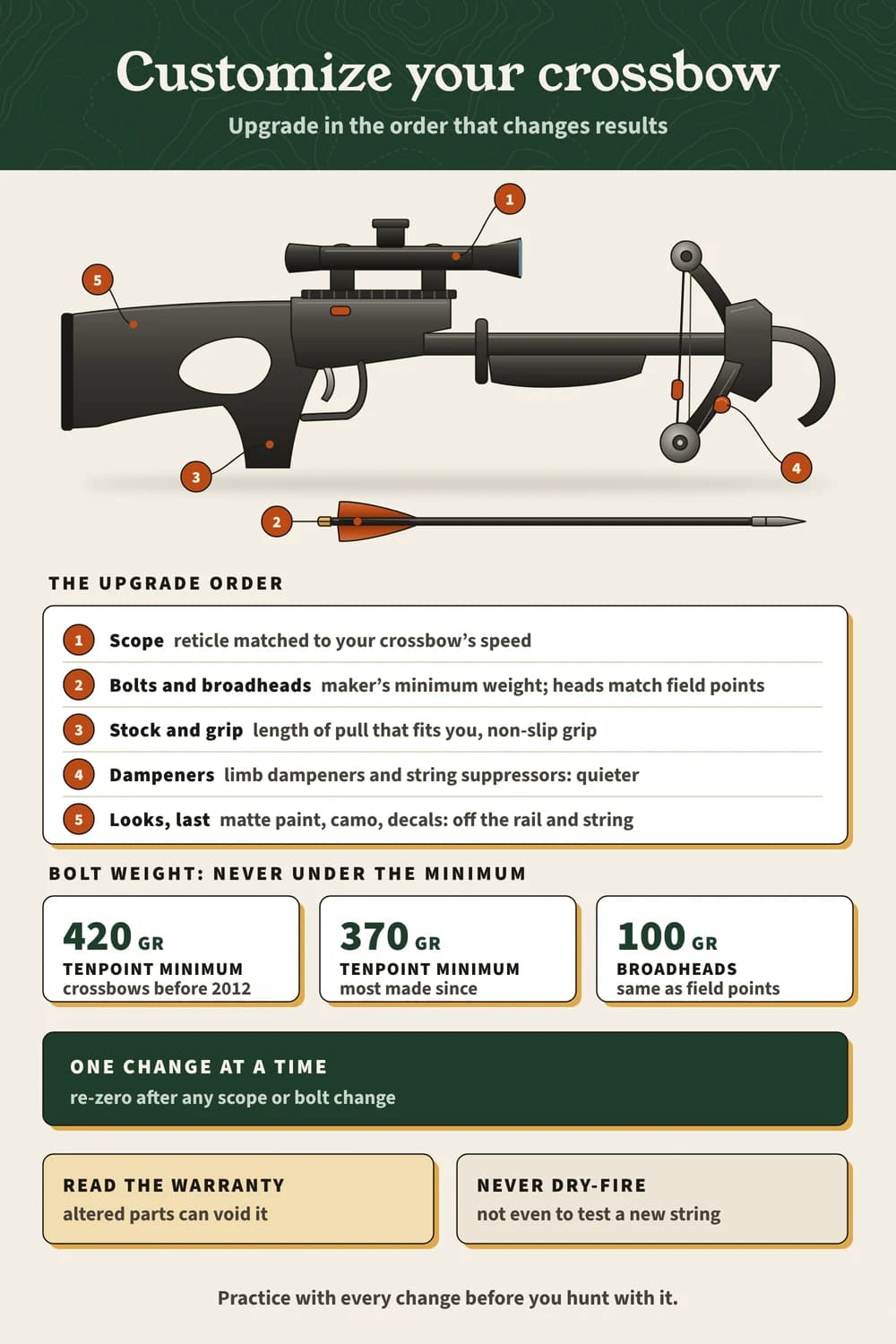
Upgrade in this order: a better scope, then bolts and broadheads matched to your bow, a stock that fits you and dampeners that cut noise. Paint, camo and decals come last (here’s how to spray paint a crossbow), and you end up with a crossbow that feels like yours and shoots where you aim. 😊
Crossbow customization basics: what to upgrade first
Every change should improve how the crossbow shoots, carries or hides. Looks are a bonus. Start with your crossbow's manual, which lists the bolt weights, strings and accessories it's built for.
| Upgrade | What it changes | Check first |
|---|---|---|
| Scope | Aiming at distance | Reticle matches your crossbow's speed; eye relief |
| Bolts | Accuracy, flight and penetration | Manufacturer's minimum total arrow weight and length |
| Broadheads | Hunting results | Same weight as your field points; your state's rules |
| Stock and grip | Comfort and steady holds | Length of pull; whether the part is approved for your model |
| Dampeners and suppressors | Noise and vibration | Fit on your limbs and string without touching the cams |
| Paint, camo, decals | Glare and style | Keep off the rail, string, cables and trigger |

// Free printable
Get the range log I actually use.
Seventeen printable pages: session log, score tracker, a 30-day drill challenge, a bow maintenance card, a first-season checklist and more. Join the monthly email and it lands right away.
Looks and camo: paint, wraps and decals that don't give you away
Looks come last in the upgrade order. But they still count in the woods: glare and a shiny finish can give you away before you ever shoot.
1. Matte paint job
A non-reflective, matte paint made for outdoor gear gives your crossbow personality and cuts the glare that can catch a deer's eye. And a sealant on top helps the finish resist moisture. Read the full method in how to spray paint a crossbow.
2. Camo tape and wraps
Camo tape or a wrap breaks up the crossbow's outline without permanent changes. Removable wraps let you match diffrent cover, from green early season to grey late season.
3. Decals
Decals add a little fun at the range. Put them where they won't reflect light, and skip glossy stickers on the side that faces the deer.
Accuracy upgrades: scope, grip, broadheads and bolts
These four upgrades change where your bolts land, so make them one at a time and re-check your zero after each.
4. Upgrade the scope

A better scope is the biggest accuracy gain on a budget crossbow. Look at magnification, the reticle (many are calibrated to a speed range), eye relief and how bright it stays at dawn. Compare options in the best crossbow scopes.
5. Custom grip and stock
The grip and stock are where you hold the crossbow, so they decide how steady you are. A non-slip grip helps in the rain, and an adjustable stock lets you set the length of pull for your arms and your hunting jacket.
6. Matched broadheads
Pick broadheads that suit your game and weigh the same as your field points, usually 100 grains. Then confirm they fly to the same spot before the season. Your state may also set rules: Ohio, for example, requires at least two cutting edges and a 3/4-inch width (see Ohio crossbow laws).
7. Better bolts
Good bolts fly straighter and more consistently. Never go under your manufacturer's minimum total arrow weight: TenPoint, for example, lists 420 grains for its crossbows made before 2012 and 370 grains for most made since, and underweight arrows are excluded from its warranty.
Quieter and longer-lasting: dampeners, string care and practice
The last three keep your crossbow quiet and shooting like new, season after season.
8. Noise and vibration dampeners
String suppressors and limb dampeners soak up the vibration that makes a crossbow loud. A quieter shot gives a deer less reason to jump the string, and less vibration feels better on your shoulder.
9. String, cable and rail care
Fresh strings and a lubed rail keep shots smooth and consistent. Use rail lube the way your manual says, and replace strings and cables with parts approved for your model. TenPoint's warranty, for one, is void if you fit non-factory strings or cables.
10. Practice with every change
Practice isn't a part you bolt on, but it's what makes every upgrade pay off. Shoot each change on a crossbow target at your hunting distances, and re-zero after any scope or bolt change.
More crossbow customization ideas
- Add a sling and test a few mount points for easy carrying.
- Fit a crank cocking device if your model supports one and you want an easier cocking stroke.
- Use lighted nocks to follow your bolt at dawn and dusk.
- Mount a quiver that suits your setup.
- Look at a string stop system to cut noise and vibration.
| Do | Don't |
|---|---|
| Use weather-resistant materials. | Skip regular maintenance. |
| Make sure every part is fitted tight. | Overload the crossbow with accessories. |
| Focus on upgrades that improve function. | Use paints or decals that chip easily. |
| Test each change at the range. | Assume a change helped before you’ve tested it. |
Crossbow customization pros and cons: is it worth it?
Customizing pays off when each change solves a real problem: glare, noise, a stock that's too long. It costs you when it's only for show or when it fights how the crossbow was designed.
Pros
- Performance tuned to how you shoot
- More comfort, which means steadier shots
- A look that's yours
- Better stealth and camouflage
Cons
- Costs add up, especially with high-end accessories
- Heavy customizing can lower resale value
- Some changes can void the warranty
- Parts that don't match the design can make the crossbow less reliable
Expensive gear isn't what makes you shoot better; practice is. I haven't shot a crossbow, so this rule comes from my own archery: build up to upgrades as your skills grow.
As a beginner you're just not gonna appreciate any good gear. You have to build it up.
Want a cheap way to make your crossbow quieter? This video compares DIY limb dampeners in slow motion.
Before you order parts, this one-page version of the upgrade order is worth a look.
// FAQ
Frequently asked questions
Quick answers to the questions readers ask most.
Does customizing a crossbow void the warranty?
It can. Some manufacturers, TenPoint among them, exclude crossbows that have been altered or shot with underweight arrows. Read your warranty before you paint, swap parts or change bolts.
Can customization affect my crossbow's accuracy?
Yes, both ways. A better scope, matched bolts and a stock that fits you can tighten groups, while any scope or bolt change means you need to re-zero.
Should I pick a scope based on magnification alone?
No. The reticle, eye relief, light transmission and durability matter as much, and the reticle should match your crossbow's speed.
Does camouflaging a crossbow make a difference?
It helps mostly by cutting glare and breaking up the outline. Your own movement and scent still matter more than the color of the stock.
What's the first upgrade to make on a new crossbow?
A better scope, then bolts and broadheads that match your manufacturer's specs. If your bolts are under the maker's minimum weight, replace them before anything else.

Final thoughts
The best way to customize your crossbow is to fix one real problem at a time, in the order that changes results: the scope, the bolts, fit and noise, then looks. Check the manual and warranty before each change, and test it at the range.
Do that and every upgrade earns its place. Log what each change does to your groups, and the free range log makes that easy.
