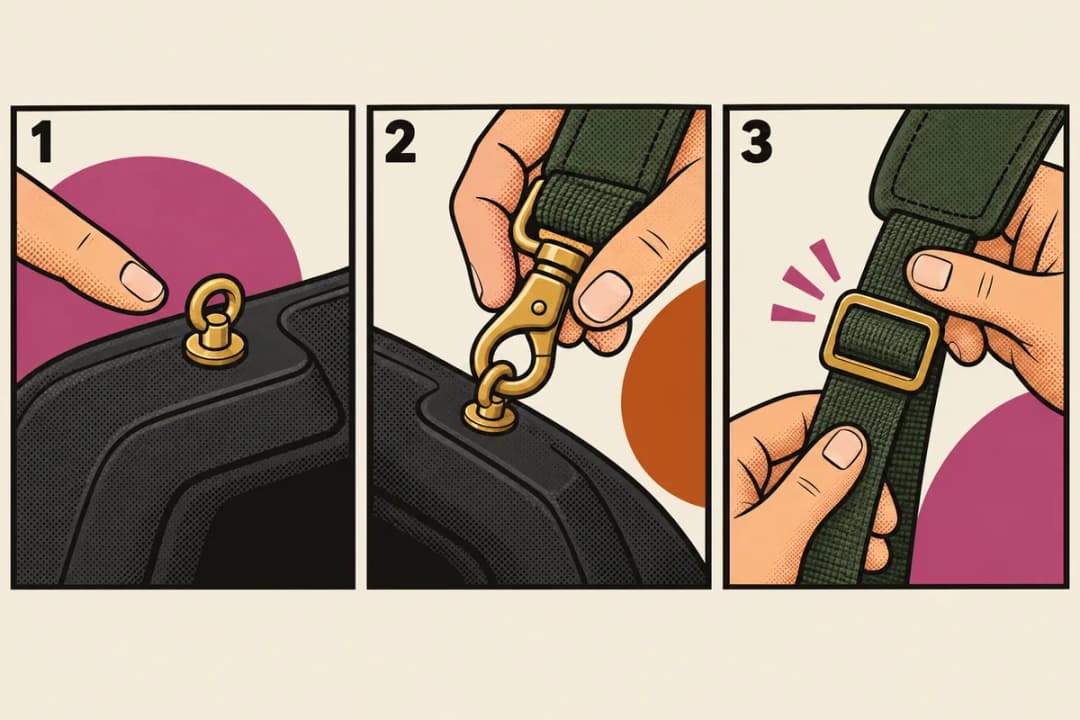


- A two-point sling keeps your crossbow tight to your body and frees both hands on the walk in.
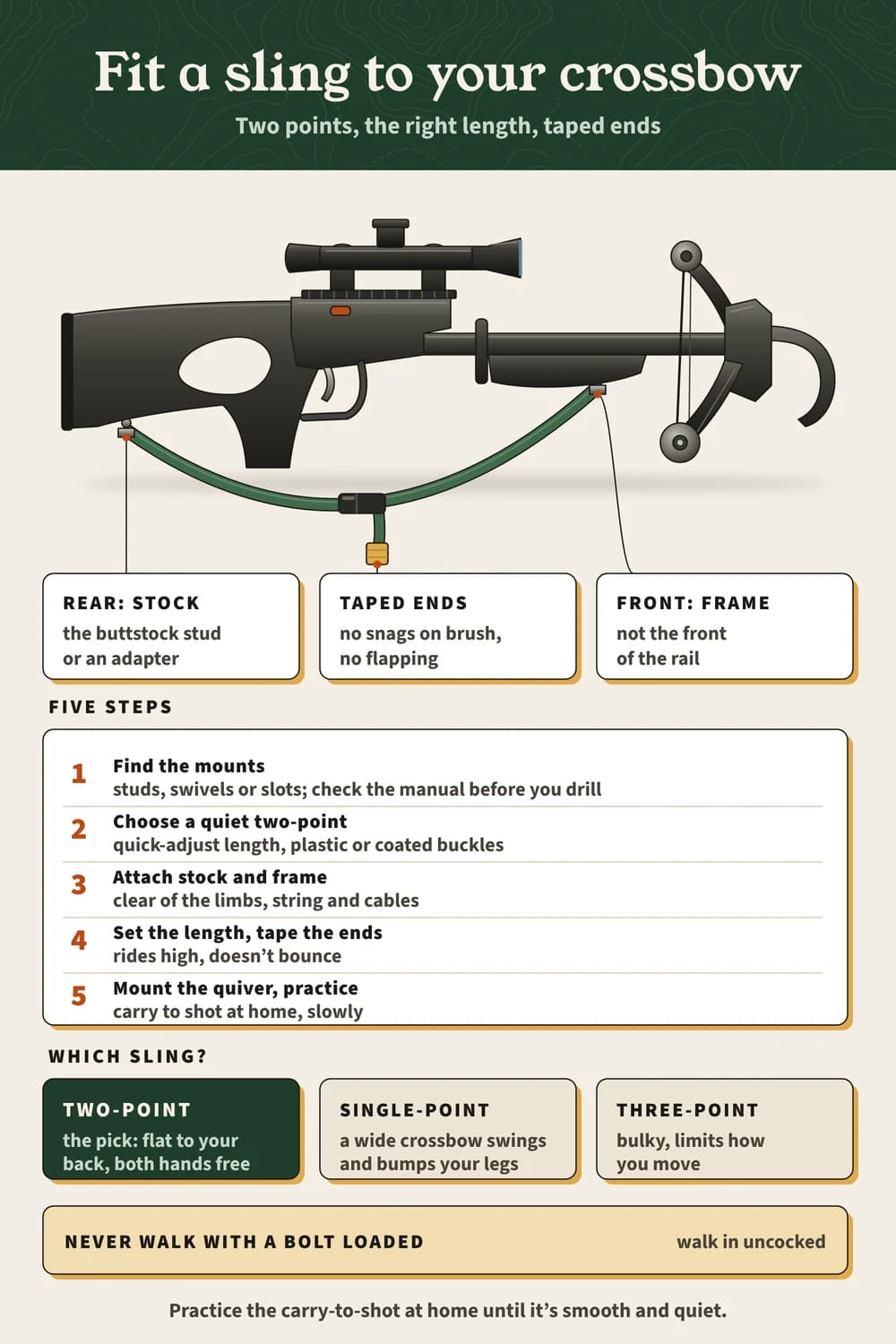
- Attach it at the stock and the frame, well clear of the limbs, string and cables.
- Tape or tuck loose strap ends so they don’t snag brush or flap and spook game.
- Never walk with a bolt loaded; most crossbow manuals warn against it.
- Practice the carry-to-shot at home until it’s smooth and quiet.
Why carry a crossbow in your hands at all? Half a mile in, your arms burn and every branch grabs a limb. 😮💨
Fit a two-point sling to the stock and frame, tune the length, and tape the loose ends. Do it once and you walk in with both hands free, a quieter crossbow and a quick shoulder when a deer steps out.
How to fit a sling to your crossbow in 5 steps
I haven’t carried a crossbow in the field. These steps come from crossbow manuals, sling makers and hunters’ setup videos, like the one below on a Barnett Whitetail Hunter.
Step 1: Find your crossbow’s sling mounts
Some crossbows come with sling studs, swivels or slots on the stock and frame, others need an adapter. Check your manual before you drill anything, because drilling a stock can void a warranty or hit internal parts.
Step 2: Choose a quiet two-point sling
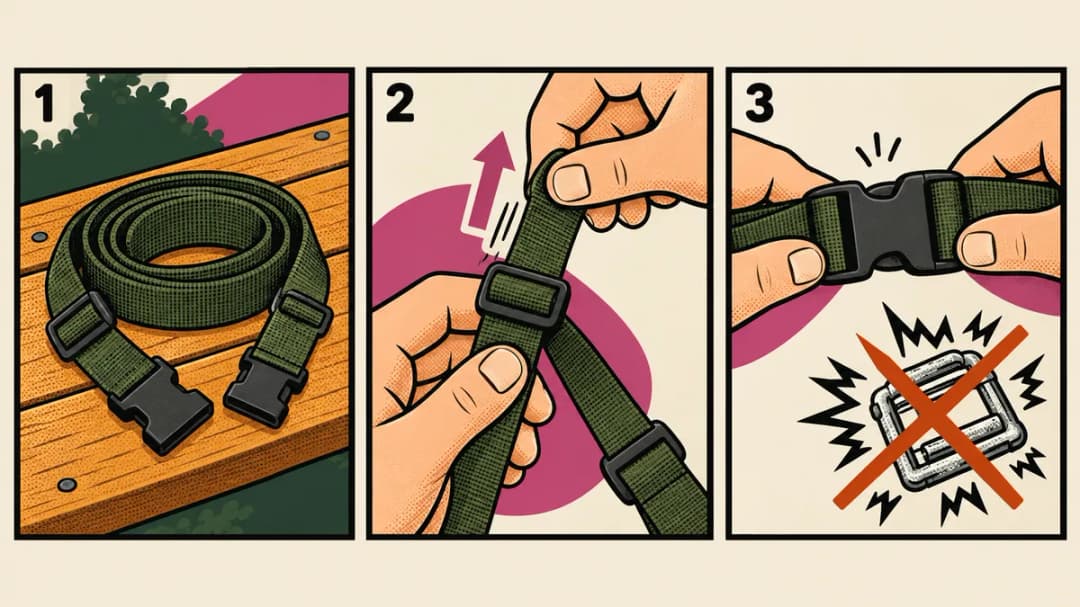
A two-point sling attaches at two places and holds the crossbow flat against your back or side. Look for quick-adjust length and quiet hardware: plastic or coated buckles click less than bare metal.
The Condor Speedy two-point sling, for example, has a pull-tab length adjuster and a side-release buckle. It’s built for rifles, so check that its strap adapters fit your crossbow’s mounts.
Step 3: Attach it to the stock and the frame
Clip the rear end to the buttstock and the front end to the frame, not the front of the rail. This keeps the crossbow tight to your body and stops it snagging branches as you move.
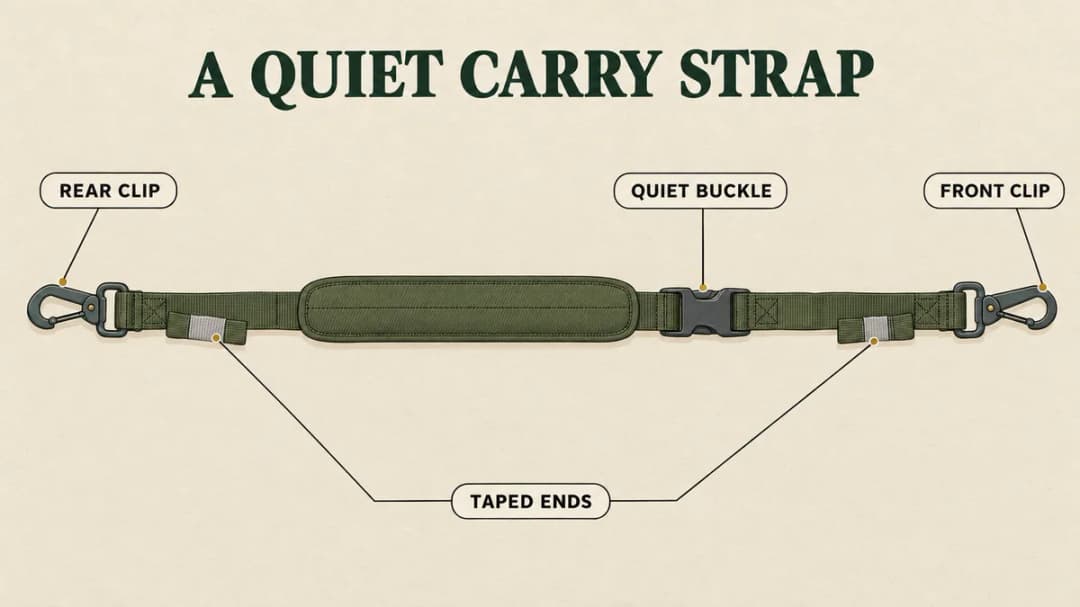
Step 4: Adjust the length and secure the loose ends
Set the length so the crossbow rides high and doesnt bounce when you walk. A sling that’s too long swings and bumps your legs; too short and you can’t get it off your shoulder quickly.
Step 5: Mount your quiver and practice the carry-to-shot
Mount your quiver where it clears the sling (often on a side rail); see where to mount your crossbow quiver. Then practice going from carry to shooting position at home, slowly, until it’s smooth.
Done right, the crossbow rides high and quiet on your shoulder, and both hands stay free until you need it.
Two-point vs single-point vs three-point slings for crossbows
Use a two-point sling. It’s what most crossbow hunters carry, and the table shows why the other two styles suit rifles better.
| Sling type | How it attaches | Good for | Drawback on a crossbow |
|---|---|---|---|
| Two-point | Stock and frame | Long walks, spot-and-stalk, hands-free carry | Takes a moment to unshoulder |
| Single-point | One point near the rear | Fast handling on rifles | A wide crossbow swings and bumps limbs and legs |
| Three-point | Wraps around the body and stock | Keeping a rifle close for duty use | Bulky and limits movement |
Carry your crossbow safely with a sling
A sling changes how you carry, so it changes the safety rules a little. Keep these in mind every time you shoulder it:
- Walk in uncocked and cock it once you’re set up. If your manual allows carrying it cocked, keep the bolt out until then.
- Keep the sling clear of the string, cables and limbs at all times.
- Check that mounts and screws are tight before each hunt; walking can loosen them.
- Pad the shoulder strap if you walk far, to cut fatigue.
- Travel with it in a case between hunts; see how to transport a crossbow safely.
A good sling setup is quiet and comfortable, and these do’s and don’ts cover both.
Do
- Check the fit and comfort of your sling.
- Tape or tuck strap ends.
- Mount the quiver where the sling clears it.
- Recheck mounts and screws often.
Don’t
- Overlook noise from buckles and loose ends.
- Ignore how the crossbow balances on your back.
- Rush the setup the night before the hunt.
- Load bulky accessories that slow you down.

// Free printable
Get the range log I actually use.
Seventeen printable pages: session log, score tracker, a 30-day drill challenge, a bow maintenance card, a first-season checklist and more. Join the monthly email and it lands right away.
Crossbow ground hunting: advantages and disadvantages
A sling matters most when you hunt from the ground and move a lot. Know the trade-off before you choose ground over a stand.
Pros
- You can move with the game and the wind instead of waiting
- More freedom to pick your spot than a treestand
- Spot-and-stalk hunting is exciting and teaches you the terrain
Cons
- More walking and more physical effort
- Wind, cover and noise are harder to control
- A lower vantage point means more careful shot placement
A slung crossbow on the ground still needs a quiet shot. Pair your setup with dampeners and sharp heads: see how to make your crossbow quieter and the best broadheads.
Before you head out, here’s the whole sling setup on one page, from the two mount points to the walk in.
// FAQ
Frequently asked questions
Quick answers to the questions readers ask most.
Can I use a three-point sling for ground hunting?
You can, but skip it: it’s bulky and slows you down bringing the crossbow up. A two-point sling is simpler and is what most crossbow hunters use.
Where should a sling attach on a crossbow?
At the buttstock and the frame, using the mounts your crossbow has. Keep both points clear of the limbs, string and cables.
Do all crossbows come with sling mounts?
No. Many have studs or slots on the stock and frame, and others need an adapter. Check your manual or ask the maker before adding studs.
How often should I check my crossbow setup on a hunt?
Give it a quick look whenever you stop, especially after pushing through brush. Loose screws and buckles make noise and can drop gear.
Is a quiet sling really that important?
Yes, on the ground every click and rustle carries. Quiet buckles and taped ends cut the small noises that spook deer at close range.
Final thoughts
Fitting a sling is a small job that makes a big difference on the walk in. Two points, the right length and taped ends are most of it.
Set it up at home, practice the carry-to-shot, and you’ll walk into the woods with both hands free. If you’re still choosing a crossbow, start with the best crossbows, and track your practice with the free range log.
