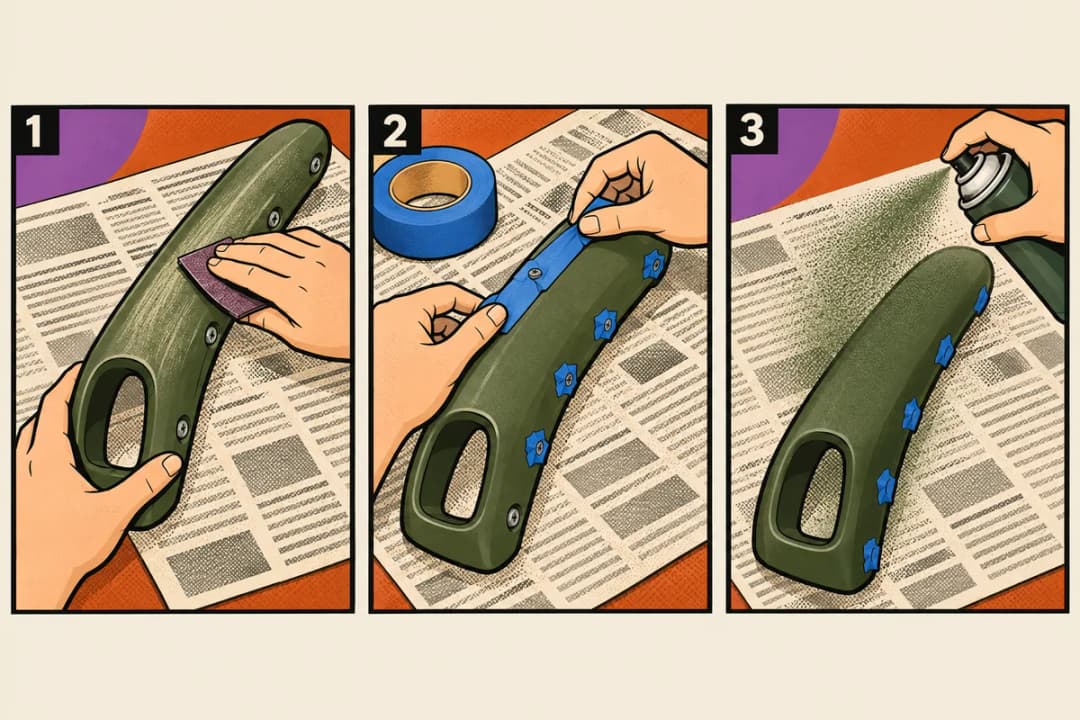


- Yes, you can spray paint a crossbow stock with a flexible plastic paint such as SEM Bumper Coater.
- Properly prepping the surface (clean, degrease, scuff-sand, mask) decides whether the paint lasts.
- Keep paint off the string, cables, rail and trigger; those parts must stay clean to work safely.
- A careful paint job won’t hinder performance, but it can void the warranty on altered parts.
Yes, you can spray paint a crossbow, and yes, it can go badly: peeling paint, a sticky rail, a refused warranty claim. 😬
The way to avoid all three: use a flexible plastic paint, prep the stock well and mask everything that moves. Get it right, add a few other ways to customize your crossbow, and it looks like yours by opening day. 👍
Can you spray paint a crossbow? Yes, with the right paint and prep
Many modern crossbow stocks are synthetic (molded polymer or composite), so they need a paint that sticks to plastic and flexes with it. SEM Bumper Coater is a popular choice because it’s made for flexible car bumpers and SEM says the coating stays flexible after it cures.
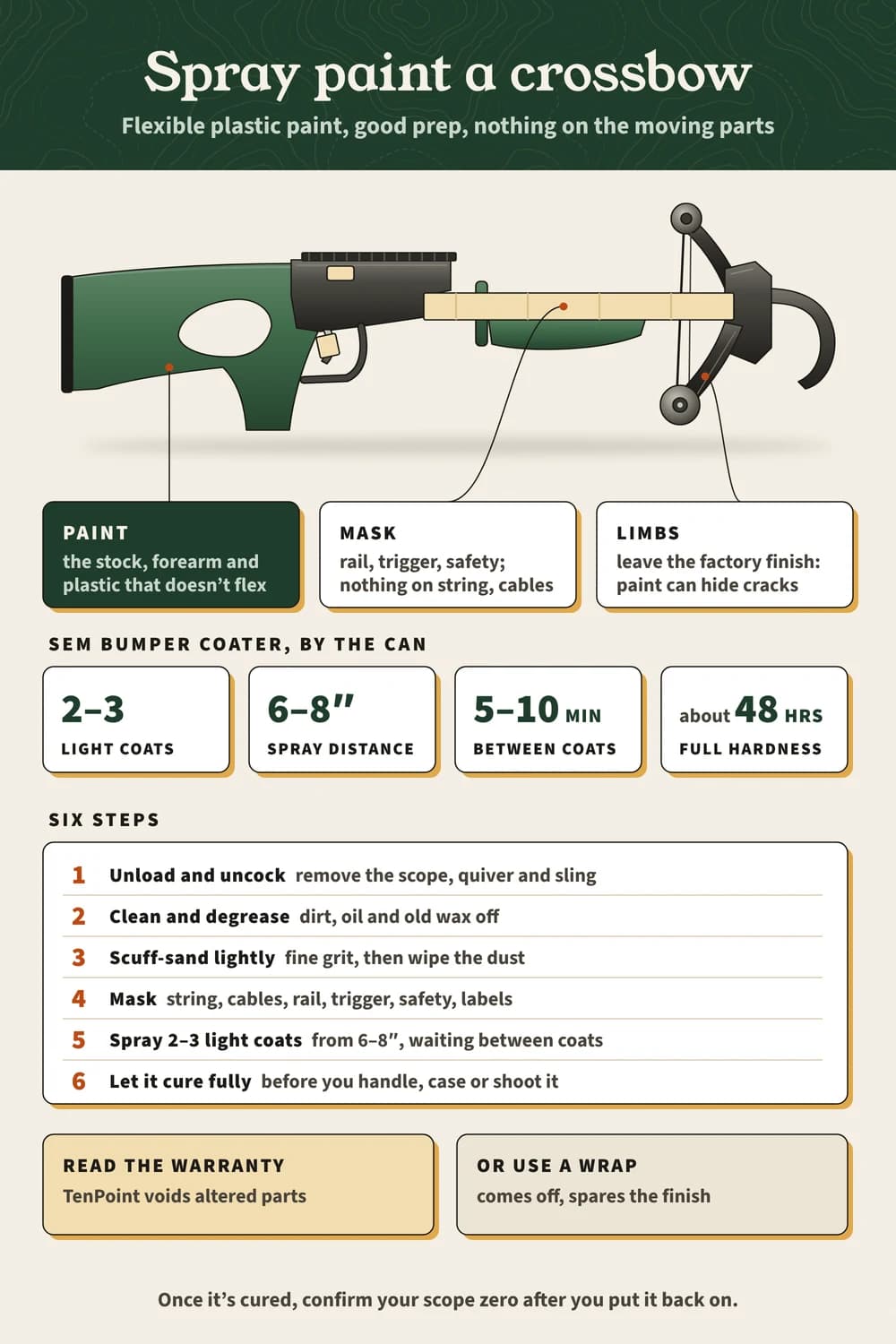
The parts you can paint are the stock, the forearm and other plastic parts that don’t move or flex. The parts you must never paint are the string, cables, rail, trigger, safety and scope lenses.
Before you start consider a wrap instead. Camo wraps and skins come off later and never touch the factory finish. More ideas are in my list of ways to customize your crossbow, or start fresh with one of the best crossbows.

// Free printable
Get the range log I actually use.
Seventeen printable pages: session log, score tracker, a 30-day drill challenge, a bow maintenance card, a first-season checklist and more. Join the monthly email and it lands right away.
What kind of paint to use on a crossbow: flexible plastic paint
Choose a paint made for for flexible plastic, not a general-purpose enamel. Standard spray paint can crack and flake on plastic that flexes or takes knocks in the field.
- SEM Bumper Coater: a flexible coating for plastic bumpers, sold in aerosol cans.
- Plastic primer or adhesion promoter: SEM says Bumper Coater needs neither, but other paints may need one to bond to a slick molded stock.
- Matte or flat camo colors: cut glare, which matters more than gloss in the woods.
Check the sheen before you buy. SEM sells Bumper Coater to match factory bumper finishes, so read the can for the exact gloss level.
Will paint hold up on crossbow limbs? Usually not worth the risk
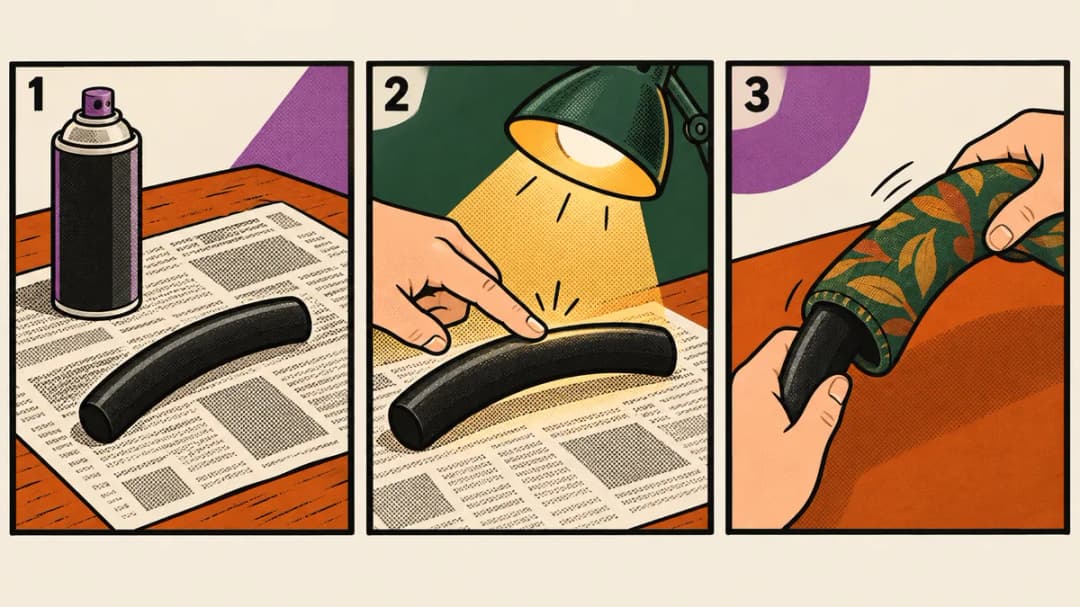
Limbs bend hard on every shot. And a crack hidden under fresh paint is harder to spot. I’d leave the limbs in their factory finish and paint only the stock and parts that don’t flex.
If you still want limbs to match, ask the manufacturer first or use a wrap made for limbs. Inspecting limbs for cracks matters more than any color, because a damaged limb can fail under full draw weight.
Can SEM paint go over a soft-touch finish?
It can, with extra prep. Remove any peeling or sticky soft-touch coating first, because paint only sticks as well as the layer underneath it.
- Scrape or sand away loose soft-touch material.
- Scuff intact areas lightly so the new paint can bite.
- Wipe with a plastic-safe cleaner and let it dry fully.
How to prep and paint a crossbow stock in 6 steps
- Unload and uncock the crossbow, and remove the scope, quiver and sling.
- Clean and degrease the stock to remove dirt, oil and old wax.
- Scuff-sand lightly with fine-grit sandpaper, then wipe off the dust.
- Mask the string, cables, rail, trigger, safety and any labels with painter’s tape.
- Spray 2–3 light coats from 6–8″, waiting between coats as the can directs.
- Let it cure fully before you handle, case or shoot it.
| Stage | SEM Bumper Coater guidance | Why it matters |
|---|---|---|
| Coats | 2–3 light coats | Thin coats don’t run or pool |
| Spray distance | 6–8″ | Even coverage without drips |
| Between coats | 5–10 minutes flash time | Lets each coat set before the next |
| Full hardness | About 48 hours (technical data sheet) | Handling early leaves marks and scuffs |
Does painting affect crossbow performance?
Paint on the stock doesn’t change how a crossbow shoots. Problems start when paint gets where parts move: the rail, the trigger box, the string or the cables.
A matte finish can also cut glare in the field. That’s a small bonus on top of a quieter setup, which you can work on with my guide to making your crossbow quieter.
Pros and cons of painting your crossbow
Paint can make your crossbow yours and cut glare, but it isn’t free of risk. Here’s the honest trade-off.
Pros
- Matches the crossbow to your camo or style
- Covers scuffs and worn spots
- A matte finish can reduce glare
- A low-cost refresh for an older crossbow
Cons
- Can void the warranty on painted parts
- Poor prep leads to peeling or cracking
- Takes time to prep, coat and cure
- Overspray on moving parts can cause problems
Tape this one up next to your spray cans: it’s the whole paint job, prep to cure, on one page.
// FAQ
Frequently asked questions
Quick answers to the questions readers ask most.
Does painting a crossbow require taking it apart?
Not completely, but remove the scope, quiver and sling and mask everything else. Leave string and limb work to a pro shop, because compound crossbows need a crossbow press to de-string.
How long does crossbow paint take to cure?
It’s dry to the touch quickly, but full hardness takes longer. SEM’s data sheet gives about 48 hours for Bumper Coater; follow the can you use.
Can I use standard spray paint on my crossbow?
No. Standard enamel isn’t made to flex with plastic and tends to chip, so use a flexible plastic paint.
Will painting my crossbow void the warranty?
It can. TenPoint voids coverage on parts altered from their original state, so check your brand’s terms first.
Can I paint my crossbow limbs?
You can, but I wouldn’t. Paint can hide cracks, and limbs take the most stress of any part.

Final thoughts
Painting a crossbow stock is a doable weekend project if you use a flexible plastic paint, prep well and mask every moving part. Leave the limbs, string and rail alone, and check your warranty first.
Once it’s cured, take it to your target and confirm your scope zero after reinstalling it. Then put fresh broadheads in your quiver and log your groups in the free range log.
